

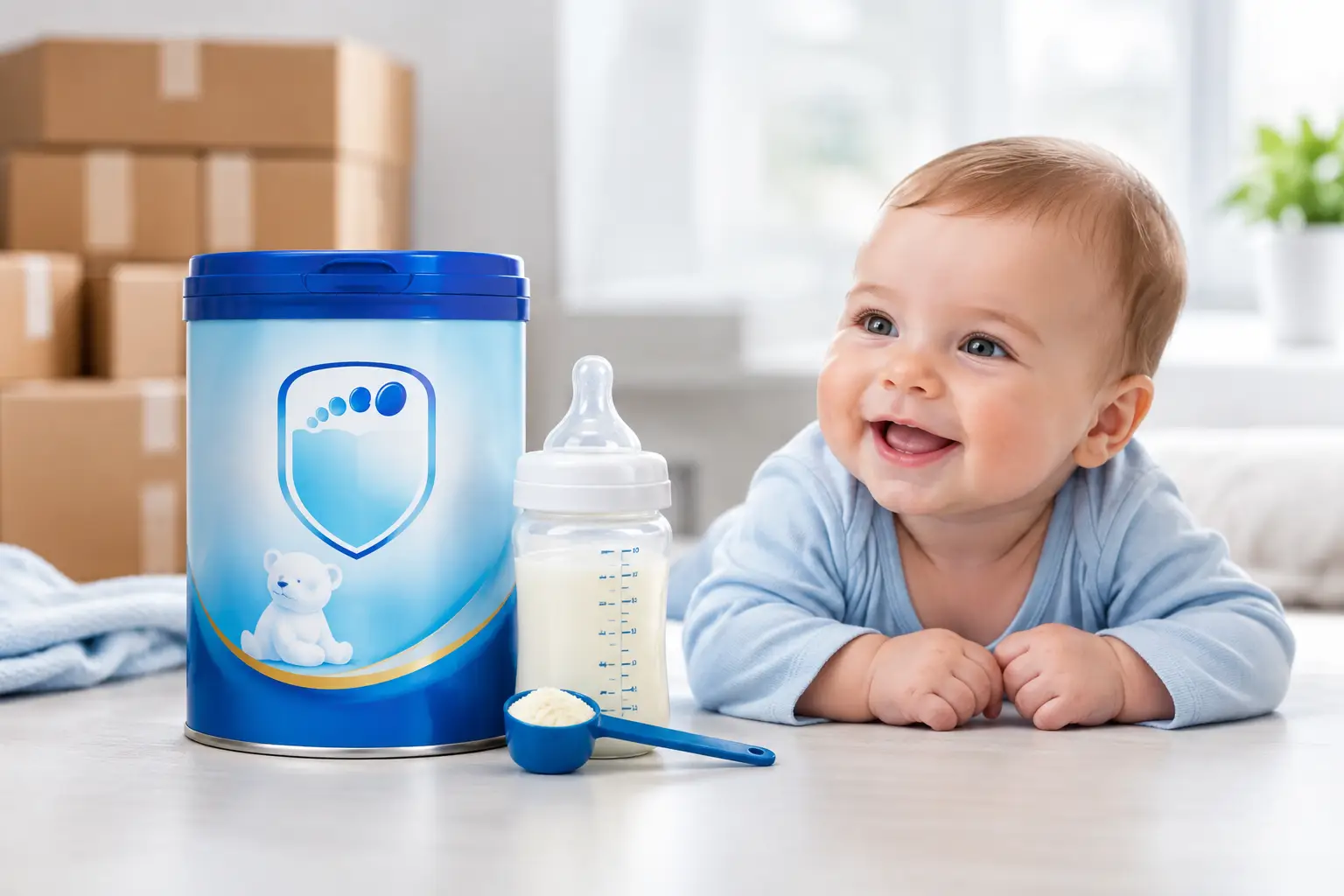
A missed formula delivery is not a minor stock issue. For a pharmacy group, retailer or importer, it can mean empty shelves, cancelled online orders and difficult conversations with customers who expect continuity. Aptamil formula remains a recognised line across many international markets, but a successful wholesale purchase depends on more than finding a competitive unit price. Buyers need the right product format, a verifiable supply route and shipment documentation that matches the destination market.
Why Aptamil formula remains a key wholesale line
Aptamil has broad recognition among parents and retail buyers, supported by a range that addresses different feeding stages and selected dietary requirements. For professional purchasers, that recognition can support product turnover, provided the assortment is chosen carefully for the local market.
The range commonly includes infant formula, follow-on formula and growing-up milk, alongside selected specialised options such as anti-reflux, comfort and lactose-free products. Availability, naming, pack sizes and recipes can vary by country of manufacture and intended market. That makes SKU-level verification essential. A product that sells well in one territory should not automatically be assumed to be the correct version for another.
The commercial opportunity is strongest when Aptamil is treated as a planned category rather than a one-off purchase. Core stage products may create regular volume, while specialist lines can serve pharmacies, healthcare-focused retailers and e-commerce customers looking for more specific feeding options. The right balance depends on local demand, shelf space, forecasted reorder cycles and the regulatory position of each destination.
What professional buyers should confirm before ordering
Wholesale infant nutrition procurement carries more responsibility than ordinary grocery purchasing. Formula is a sensitive, highly regulated category, and documentation gaps can create costly delays at customs or prevent a customer from accepting stock.
Start with product identity. Confirm the full product name, stage, flavour or variant where applicable, net weight, packaging language, barcode and country-market version. Images are useful, but they should support rather than replace written SKU confirmation. For repeat orders, retain an approved product specification so that substitutions do not enter the supply chain without review.
Next, establish traceability. Buyers should be able to record batch or lot information, best-before dates and the source of the goods. These details protect inventory control at warehouse level and support efficient action should a retailer, authority or customer request clarification. For formula, a short remaining shelf life can quickly reduce the value of an otherwise attractively priced offer, especially where sea freight, port handling and inland delivery are involved.
Documentation should be discussed before goods are dispatched, not after they have reached the port. Depending on the order and destination, commercial buyers may require a commercial invoice, packing list, certificate of origin where applicable, transport documents and product-related materials requested by local authorities. Requirements differ significantly between markets. Importers remain responsible for confirming applicable registration, labelling, food-safety and customs obligations in their own territory.
A practical pre-order review should cover:
- Exact SKU, pack format, language version and barcode
- Batch traceability and remaining shelf-life requirements
- Case configuration, pallet dimensions and total gross weight
- Required export, customs and commercial documentation
- Lead time, shipping method and Incoterms agreed for the transaction
These checks may appear routine, but they prevent the most common causes of wholesale disruption: receiving the wrong market version, underestimating freight volume, or discovering documentary requirements too late.
Planning an Aptamil formula assortment
The best assortment is rarely the widest one. Importers and retail buyers need enough choice to meet demand without tying too much working capital into slow-moving stock. A staged approach is often more dependable: build availability around the products with established local demand, then add specialist products once sales data and customer feedback justify deeper range investment.
For supermarket and hypermarket buyers, mainstream stage products may be the starting point because they are easier to merchandise and forecast. Pharmacy chains may place greater emphasis on comfort, anti-reflux or lactose-free options, where staff guidance and product availability can influence repeat custom. Online retailers can use a broader catalogue, but must be especially disciplined on expiry management, fulfilment capacity and accurate product listings.
Consider case quantities alongside consumer demand. A low-volume specialist product can be commercially sensible when purchased within a mixed load, yet become less attractive if it requires a full pallet and has a longer sell-through period. Mixed pallet and mixed-load options can help distributors test demand while retaining access to high-volume core lines.
Forecasting should also reflect the real transport timeline. Sea freight may provide a stronger landed-cost position for larger orders, while road or air options can be useful when replenishment is urgent. The cheapest transport choice is not always the lowest-cost commercial decision if it leaves insufficient shelf life on arrival or creates an out-of-stock period for a fast-moving line.
Sourcing, authenticity and product handling
Recognised infant-formula brands attract demand, which makes disciplined sourcing particularly important. Professional buyers should work with suppliers that can explain where stock is sourced, how it is stored and how product details are verified before dispatch. Genuine products, intact packaging and batch-level visibility are basic expectations, not added extras.
Handling standards matter throughout the journey. Formula should be kept in clean, dry conditions and protected from damage, moisture and excessive heat. Warehouse teams should apply stock rotation principles and inspect outer cases before loading. For export shipments, strong palletisation, appropriate wrapping and clear carton counts reduce the risk of loss or confusion during transhipment and destination receiving.
Buyers should also avoid making unsupported nutritional or medical claims in local marketing. Product labels and approved market materials should guide how the range is presented. Where products are intended for special dietary use, local rules may impose additional controls. A supplier can provide accurate commercial information, but the importer should ensure local compliance review is complete before sale.
Building a dependable export process
Wholesale supply works best when the buyer and supplier agree the operational details early. This includes order quantities, loading configuration, payment terms, collection or delivery arrangements, export packing and the documentation schedule. Clear communication is particularly valuable when supplying new markets, where a small discrepancy in consignee details or paperwork can hold a consignment at the border.
For pallet orders, buyers should request the information needed to plan receiving capacity: pallet count, dimensions, gross weight, case count and estimated collection date. For container programmes, the conversation should extend to loading plans, container suitability, port routing, transit expectations and the allocation of freight responsibilities. Full-container purchasing can improve unit economics, but only where demand, storage capacity and cash flow support the commitment.
Repeat supply arrangements offer a further advantage. Once product specifications, documents and delivery preferences are agreed, future orders become easier to administer and less exposed to preventable error. This is where a dependable wholesale partner adds value – not simply by offering stock, but by making supply predictable enough for buyers to plan promotions, retail replenishment and onward distribution with confidence.
Baby Formula EU supports professional buyers with European sourcing channels, wholesale-scale order options, traceability-focused handling and export-ready commercial coordination. The aim is straightforward: help importers and distributors secure recognised formula lines without adding unnecessary complexity to procurement.
The commercial decision behind the price
A low quoted price can be attractive, but it is only one part of landed cost. Buyers should account for freight, insurance where required, duties, local clearance costs, storage, handling, shelf-life risk and the cost of a delayed shipment. The most competitive offer is the one that arrives as agreed, with stock that can be sold through the intended channel and documents that support a smooth import process.
For Aptamil formula, dependable availability is often more valuable than a small saving on a single purchase. Choose product lines that fit the market, verify every commercial and regulatory detail before dispatch, and build supply relationships that make the next order easier than the last.
One thought on “Aptamil Formula for Reliable Wholesale Supply”