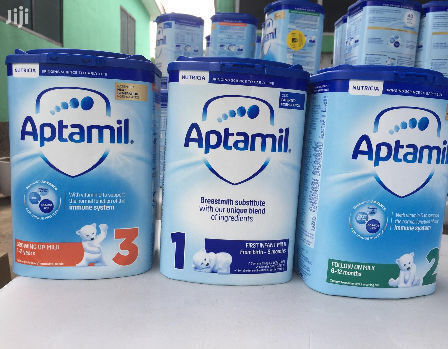

Follow-On Milk Wholesale for Reliable Supply

A missed delivery of stage 2 formula is not a minor gap on a shelf. For pharmacies, retailers and distributors, it can disrupt repeat purchasing, force expensive substitute buying and weaken customer confidence. Follow-on milk wholesale therefore needs to be managed as a continuity-of-supply category, not simply as a price comparison exercise.
Professional buyers need the right branded products, clear batch information, commercially sensible minimums and export paperwork that matches the shipment. The best purchasing decision balances landed cost with availability, product authenticity and the practical requirements of the destination market.
What buyers should expect from follow-on milk wholesale
Follow-on milk is commonly positioned for infants from around six months, although product labelling, preparation instructions and permitted claims vary by brand and market. It is distinct from first infant milk and toddler or growing-up milks, so accurate stage selection matters when building a wholesale range.
For a distributor or retail buyer, the category has two jobs. It must give existing customers a logical next-stage option, and it must maintain familiar brand availability as families move through feeding stages. That makes continuity across a brand range particularly valuable. A buyer stocking Aptamil, Nutrilon, HiPP Organic, Cow & Gate or SMA may require coordinated availability of follow-on products alongside first infant and toddler lines.
A credible wholesale offer should make the essentials easy to verify before an order is confirmed: brand, exact product variant, pack format, language of the label, country of origin, batch details, best-before dates and pallet configuration. These details affect both the commercial calculation and whether the goods can be sold lawfully and confidently in the intended market.
Price remains important, especially for pallet and container buyers. However, an unusually low quotation without clear sourcing, traceability or documentation can become expensive once goods are delayed, rejected or difficult to place with downstream customers. Fair wholesale pricing works best when it is supported by reliable European sourcing channels and a realistic delivery plan.
Build the range around real demand
Follow-on milk is not a single interchangeable product. Demand can vary by brand familiarity, formulation, format and local customer preference. In some markets, conventional cow’s-milk-based follow-on products account for most volume. In others, organic, goat-milk, comfort or lactose-free options may support a more specialist customer base.
The practical question is not whether every variant should be stocked. It is whether each SKU has enough predictable turnover to justify the working capital, storage space and expiry risk. High-volume core lines normally deserve priority, while specialist products are often better ordered against known customer demand or held in more controlled quantities.
Start with the core brands and stages
Buyers should assess sales by brand family rather than treating each tin or box as a standalone item. If a pharmacy group sells a strong volume of a brand’s first infant milk, there may be a clear case for its follow-on and toddler stages. If the retailer has limited space, a narrow range with dependable replenishment is usually more valuable than a broad assortment with inconsistent stock.
Pack size deserves the same attention. Larger formats can offer a more attractive unit cost and appeal to high-frequency purchasers, while smaller packs may suit convenience-led retail or trial buying. The preferred mix depends on local price points, shelf capacity and the purchasing habits of the end customer.
Treat specialist formulas carefully
Specialist infant nutrition products can be commercially important, but demand forecasting requires more caution. Anti-reflux, comfort, premature and lactose-free formulas may have lower volume yet higher urgency when required. Buyers should avoid assuming that one market’s demand pattern will transfer directly to another.
Clear product descriptions are essential. Similar-looking packs can have different intended uses, preparation guidance or stage designations. Procurement teams should confirm the exact SKU and packaging language before placing mixed-load orders, particularly where several countries’ versions of a brand are available.follow-on milk wholesale
Make traceability part of the buying decision
Infant nutrition is a high-trust category. Retail customers, regulators and business partners expect goods to be genuine, properly handled and traceable. For wholesale buyers, that means traceability should be checked before a shipment leaves the supplier, not only if an issue arises later.
Batch and date information supports stock rotation, customer service and any necessary product investigation. It also helps receiving teams plan warehouse allocation. A container with insufficient remaining shelf life may be commercially unsuitable even when the price looks attractive, especially if it will be split among several distribution points or held for phased release.follow-on milk wholesale
Ask suppliers how batch information is recorded, whether pallet labels can be matched to packing documentation and how they manage stock rotation. The answer should be specific enough for your own quality and compliance team to work with. General assurances are not a substitute for usable records.
Authenticity is equally important. Recognised brands carry strong demand, but they also attract concern where supply routes are unclear. Established sourcing and clear commercial documentation help buyers demonstrate that their products have been procured through accountable channels.
Plan paperwork before goods are packed
Cross-border formula trading is often delayed by documents rather than transport. Product paperwork must be accurate, consistent and prepared for the route and destination. A minor mismatch in product description, quantity or consignee details can hold a shipment at the point where timing matters most.
For follow-on milk wholesale orders, buyers should establish documentation requirements at quotation stage. This is particularly important for new export destinations, first-time importers and mixed shipments containing several brands or product categories.follow-on milk wholesale
A typical export file may need to include:
- Commercial invoice with agreed product descriptions, values and Incoterms.
- Packing list showing cartons, pallets, gross and net weights.
- Batch and best-before information where required by the buyer or market.
- Certificate of origin or other supporting certificates when applicable.
- Transport documentation and customs materials appropriate to the shipment route.
Requirements differ between countries, and the importer remains responsible for understanding the rules that apply to local sale, labelling and registration. Confirm the regulatory position before committing to a large order.
Choose an order model that protects availability
The right order quantity depends on sales velocity, lead times, warehouse conditions and available cash flow. Full-container purchasing can reduce freight cost per unit and provide stronger supply cover, but it also increases exposure to slow-moving stock and shelf-life pressure. Pallet orders allow more flexibility, particularly when testing a market or building a mixed brand range, though the per-unit logistics cost may be higher.
Mixed loads can be a sensible middle ground. They enable buyers to combine core follow-on lines with first-stage, toddler and selected specialty products in one shipment. This approach is useful where a distributor serves different retail channels or wants to protect availability across a wider catalogue without overcommitting to every SKU.
Forecasting should be based on sell-through, not only purchase history. Consider seasonal changes, promotional calendars, new customer accounts and the lead time needed to replenish. A simple rolling forecast shared with the wholesale supplier can reduce last-minute buying and improve allocation planning when particular products are in high demand.
Assess logistics beyond the freight quotation
Formula needs clean, dry storage and careful handling throughout the supply chain. Buyers should confirm packing standards, pallet protection, loading method and the planned route before goods are dispatched. Export-ready packing is not an optional extra when shipments will pass through multiple warehouses, ports or customs points.
Transit time must be considered alongside remaining shelf life. A cheaper route may not be the best route if it creates a meaningful risk of delay or leaves too little sales window on arrival. For some buyers, scheduled partial replenishments offer better control than a single large shipment, even if the headline freight cost is less favourable.
Communication also matters. Procurement teams need clear updates on stock status, order preparation and dispatch documents so they can coordinate receiving slots, customs brokers and onward deliveries. A responsive supplier reduces the administrative burden at the point when a shipment is moving and decisions need to be made quickly.
Work with a supplier built for repeat orders
One-off deals can occasionally fill an urgent gap, but sustained follow-on milk supply requires a relationship that supports planning. Buyers should look for a wholesale partner that understands pallet builds, mixed loads, container quantities and the documentation expectations of international trade.
Baby Formula EU supports professional buyers with recognised European formula brands, wholesale-scale order options and export coordination designed for repeat B2B supply. The objective is straightforward: make it easier to secure genuine products at commercially sensible prices without adding avoidable complexity to procurement.
The strongest wholesale arrangement is not always the one with the lowest initial unit price. It is the one that gives your business enough visibility to plan stock, satisfy customers and move goods confidently through the next stage of the supply chain.