

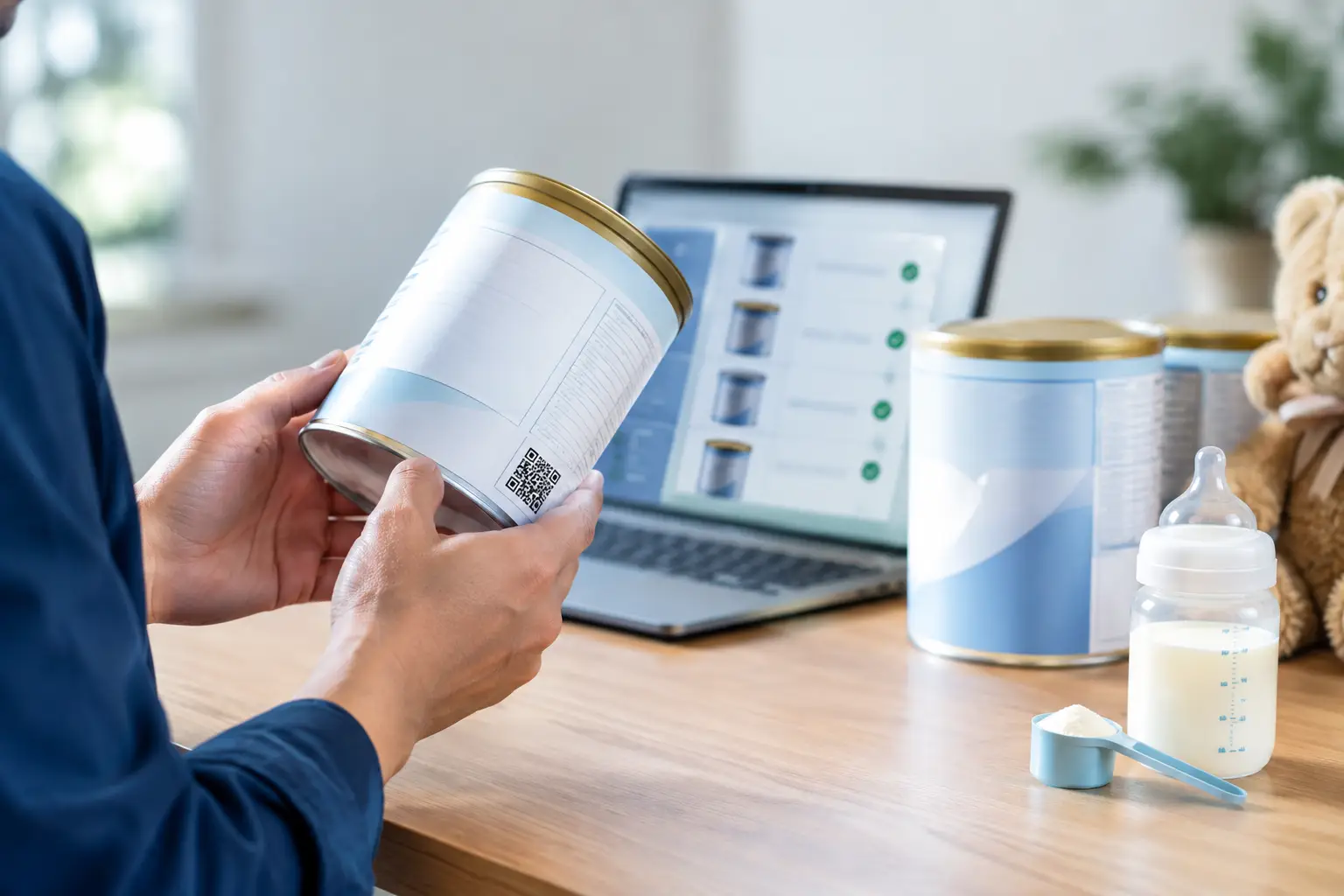
A pallet of infant formula can look complete on a warehouse floor and still create a costly problem if its production history cannot be confirmed. For professional buyers, batch traceability is the practical link between the tins or cartons received, the supplier invoice, the export documents and the original manufacturing batch. It protects stock availability, supports faster decisions during a quality query and gives importers clearer control over what enters their supply chain.
For branded products such as Aptamil, Nutrilon, HiPP Organic, Enfamil or Similac, traceability should be treated as a routine procurement requirement rather than an extra service. The category is closely regulated, highly visible and relied upon by families. A missing batch reference can turn an otherwise straightforward delivery into a warehouse hold, a customs question or a difficult customer conversation.
What batch traceability means in formula wholesale
A batch, sometimes called a lot, is a defined production grouping identified by a code printed on the product packaging. It allows the manufacturer and supply chain partners to connect a finished unit with key production and distribution records. The exact code format varies by brand and manufacturing site, but it is usually found on the base of a tin, the top or side of a carton, or outer case packaging.
For a wholesale buyer, batch traceability means being able to follow stock in both directions. You should be able to identify where a batch came from and which customers, warehouses or markets received it. This is often described as one step back and one step forward traceability.
In practice, a useful record set connects the batch number with the product name, format, stage, quantity, best-before date, dispatch date, purchase reference and destination. For export orders, it should also align with the packing list, commercial invoice and shipping documentation. The aim is not to create paperwork for its own sake. The aim is to make a specific batch easy to locate when time matters.
Why batch traceability matters to importers
Infant nutrition buyers manage more than price and availability. They also manage retailer confidence, shelf-life expectations, customs processes and the commercial consequences of an interrupted supply. Clear batch records reduce uncertainty across each of those areas.
Faster action when a quality issue is raised
If a manufacturer, authority or customer raises a question about a particular batch, the buyer needs to know whether that stock is in transit, held in a warehouse, delivered to a retailer or already sold onward. Broadly blocking every unit of a product range can be expensive and unnecessary. Isolating the relevant batch is more controlled and less disruptive.
Traceability does not prevent every recall or quality concern. What it does provide is the evidence needed to respond proportionately. A distributor with accurate inward and outward batch records can place the correct stock on hold, notify affected customers and maintain supply of unaffected batches where appropriate.
Better stock rotation and shelf-life control
Formula procurement is not simply about receiving the largest available quantity. Buyers need stock that can be distributed through their own network within an acceptable remaining shelf-life window. Recording best-before dates alongside batch information enables teams to apply first-expired, first-out rotation and avoid mixing older and newer production in an uncontrolled way.
This is particularly useful for mixed loads, multi-SKU orders and specialty products, where demand may be less predictable. Comfort, anti-reflux, lactose-free, premature and goat-milk formulas can require more careful allocation than high-volume standard stages. The right batch data helps purchasing, warehouse and sales teams work from the same picture.
Stronger customs and customer documentation
Batch traceability is not the same as customs compliance, but the two often meet in day-to-day export operations. A shipment description, product quantities and case configuration should match the documents presented for transport and clearance. When an importer asks a supplier to confirm which batches were packed on a consignment, the response should be accurate, consistent and easy to reconcile with the invoice and packing list.
For supermarket groups, pharmacy chains and online retailers, this also supports receiving checks. Their teams may need to verify product condition, date coding, quantities and batch references before stock can be released into saleable inventory. Clear documents reduce avoidable back-and-forth at the point of delivery.
The records buyers should request before dispatch
The appropriate documentation depends on the destination market, product type and agreed Incoterms. However, there are several records that should be discussed during quotation and order confirmation, not after a container has been loaded.
Buyers should confirm the exact product description and EAN or GTIN where relevant, the batch number or batch range, best-before dates, unit and case quantities, pallet configuration, country of dispatch, and the references that will appear on commercial documents. If a shipment contains several batches, the packing information should make that clear rather than presenting the load as one undifferentiated quantity.
It is also sensible to agree how batch data will be shared. Some buyers need a batch list before collection so they can prepare warehouse receiving plans. Others require it with final shipping documents. For recurring programmes, a standard format saves time and reduces transcription errors.
A traceability file does not, by itself, confirm that a product is authorised for every destination market. Importers remain responsible for checking local requirements, including labelling, registration, language rules, import permissions and any market-specific nutritional or packaging obligations. European-sourced stock may be genuine and correctly documented for export while still requiring a separate market-access review by the importer.
Building batch traceability into your receiving process
The best systems are practical enough to use during a busy delivery. If staff must search across several disconnected spreadsheets to identify one pallet, the process will fail when a query is urgent.
Start by recording the supplier order number and shipment reference before arrival. At goods-in, check the product, quantity, packaging condition, batch code and best-before date against the expected records. Photographing pallet labels and date coding can provide a useful additional reference, especially for cross-border deliveries where claims may be reviewed after the lorry has departed.
Then assign batches to a defined warehouse location and retain the link when goods are moved, split or repacked for onward distribution. A warehouse management system is useful at scale, but it is not the only option. A disciplined stock register can work for smaller operations if access is controlled, entries are made promptly and changes are reviewed.
The essential question is simple: if a customer gives you a batch code tomorrow, can your team identify the received quantity, current balance and onward destinations without guesswork? If the answer is no, the process needs attention before volume increases.
Common gaps that create unnecessary risk
One common weakness is recording only best-before dates. Dates help with rotation, but multiple batches can share the same date. Another is retaining the supplier invoice without recording which batches were actually delivered against it. This may be sufficient for accounting but not for targeted stock control.
Mixed pallets require particular care. They can be commercially efficient, especially when buyers are building a range across stages and specialist formulas, but they increase the chance of batch information being lost at receipt. Each product and batch combination should remain identifiable, even if the original pallet is broken down.
A further issue is assuming that outer cases and individual units always carry identical visible information. Packaging layouts differ. Receiving teams should know where to locate batch and date codes for the brands they handle, and exceptions should be raised before stock is released.
Choosing a supplier with traceability in mind
Price remains central to wholesale purchasing, but the lowest quotation can become expensive if batch details, product condition or shipping records are unclear. A reliable supplier should be able to explain how stock is identified, how batch information is connected to each dispatch and which documents are available for the agreed shipment.
Ask direct questions before placing a substantial order. Can batches and best-before dates be confirmed before dispatch? Will the commercial invoice and packing list match the physical shipment? How are mixed loads documented? Who is responsible for providing export-ready paperwork? What is the process if a batch-specific query is raised after delivery?
The answers reveal more than administrative capability. They show whether the supplier understands the commercial reality of infant-formula distribution. At Baby Formula EU, batch traceability is considered alongside genuine product sourcing, accurate documentation and logistics coordination because these details support repeat supply, not just a single transaction.
Make traceability part of purchase planning
Batch data is most valuable when it is planned for, not requested after a problem appears. Include it in supplier approval, purchase orders, warehouse receiving instructions and customer dispatch records. Keep responsibilities clear between procurement, logistics, quality and sales teams, particularly where stock is held across several locations or sold into multiple markets.
A well-managed batch record gives buyers something more useful than another document in a folder: the confidence to act quickly, explain clearly and keep the right product moving to the right customer.
One thought on “Batch Traceability for Infant Formula Buyers”