

Export Documents for Infant Formula Orders

Export Documents for Infant Formula Orders

A shipment can leave a European warehouse on time and still lose weeks at the border because one invoice description, batch reference or certificate does not match the cargo. For importers, distributors and retail buyers, export documents for infant formula are not an administrative afterthought. They are part of the supply chain, protecting customs clearance, product traceability and the continuity of your retail stock.

Infant nutrition is a closely controlled category. Authorities, freight partners and receiving customers need clear evidence of what has been shipped, where it came from, how it is packed and which batches are involved. The right document pack also gives your team a reliable record if a retailer, regulator or insurer asks questions after delivery.

Why infant formula paperwork needs extra care

A generic food-export file is rarely enough for formula. Products may be standard infant formula, follow-on milk, toddler milk, anti-reflux formula, comfort formula, lactose-free products, goat-milk formula, organic ranges or nutrition intended for premature infants. Their classifications, label requirements and import conditions can differ by destination.

The commercial risk is equally specific. A missing pallet is inconvenient in many categories; a delayed formula shipment can create an immediate availability problem for pharmacies, supermarkets and online retailers. Buyers therefore need documents that allow their customs broker to prepare before arrival rather than react once the consignment is held.

Accuracy matters more than volume. A well-prepared file should use the same product names, quantities, pack formats, lot or batch details and consignee information across every document. Where details differ, clearance teams must spend time resolving discrepancies that should never have reached the port or airport.

Core export documents for infant formula

The precise paperwork depends on the country of destination, mode of transport, product type and agreed Incoterms. However, a professional B2B formula shipment will commonly require the following documents.

  • Commercial invoice. This states the seller and buyer, invoice number and date, product description, quantity, unit and total values, currency, agreed delivery terms, country of origin where required, and the correct commodity code. Product descriptions should be clear enough for customs to identify the goods without relying on vague wording such as “baby products”.
  • Packing list. This records the physical composition of the load: cartons, pallets, net and gross weights, dimensions, pack configuration and product references. It should let a warehouse, freight forwarder or customs officer reconcile the paperwork against the shipment efficiently.
  • Transport document. Depending on the route, this may be a bill of lading, air waybill or CMR consignment note. It links the cargo to its journey and should show the correct shipper, consignee and notify party details.
  • Certificate of origin. Some markets require proof of origin for customs, duty treatment or local registration. Requirements vary, so buyers should confirm whether a standard certificate, a chamber-issued document or a specific preferential-origin declaration applies.
  • Health, sanitary or free-sale documentation. Certain destinations may request official health certificates, veterinary certificates, certificates of free sale or other authority-issued documents for food products. These are market-specific and must be confirmed before goods are allocated and dispatched.
  • Product specifications and batch records. Formula buyers often need ingredient information, nutritional data, allergen declarations, shelf-life details, storage requirements, batch or lot references and, where applicable, certificates of analysis. These documents support internal quality checks, retailer onboarding and traceability procedures.

Other documents may be necessary, including an insurance certificate, import permit copy, organic certificate, fumigation certificate for packing materials, or a declaration requested by the destination authority. The key point is that documents should be agreed before dispatch, not requested when the vessel is already sailing.

Start with the destination market, not the shipment date

Import rules for infant formula are determined by the destination market and the importer’s status. A document accepted for one country may not satisfy another country’s food authority, customs service or retail compliance team. The United States, for example, has its own requirements for imported infant formula, labelling and importer obligations. Other markets may focus more heavily on health certification, local-language labels, product registration or halal documentation.

Before placing a pallet, mixed-load or container order, confirm the destination country, port of entry, importer of record, customs broker and intended sales channel. A shipment intended for a national supermarket chain may need additional product data and quality documents beyond what is needed for a trading-company delivery.

It also helps to establish who is responsible for each step. Under some delivery terms, the buyer handles import clearance and local registrations. Under others, the supplier may coordinate freight and provide supporting customs materials, while the buyer remains responsible for import authorisations and compliance in the destination market. Clear allocation prevents expensive assumptions.

Product identity must match across the file

Formula naming deserves particular attention. “Aptamil 1” may not be enough on a commercial invoice if the shipment includes several tin sizes, language versions or variants. Use the full commercial product name, stage, pack size, unit count and internal SKU where available. If one pallet contains Aptamil Anti-Reflux and another Aptamil Comfort, identify them separately.

The same discipline applies to quantities. If the invoice states 1,200 tins, the packing list, pallet labels and product allocation should support that figure. If a substitute SKU is approved due to stock planning, update the paperwork rather than relying on an email trail to explain the difference later.

Batch traceability is a commercial safeguard

Batch-level traceability helps buyers manage recalls, expiry controls, stock rotation and customer queries. For large orders, request batch details early enough to align them with your receiving and quality processes. This is especially useful when stock is split across multiple warehouses or distributed to several retail accounts.

For long transit routes, shelf life should be reviewed alongside batch information. The right product can still be commercially unsuitable if its remaining shelf life does not meet your market, customer or warehouse policy after customs clearance and inland delivery.

How to prepare a shipment file that clears cleanly

The most effective approach is to build one controlled shipment record before collection. The sales order should be the source document for buyer details, delivery terms, SKUs, pack sizes and agreed prices. The warehouse then confirms actual quantities, pallet counts and batch allocation. Only after those checks should the final invoice and packing list be issued.

Ask the freight forwarder or broker for document cut-off times well before loading. Sea freight often requires advance data filings and original-document planning, while air freight may move quickly enough that a late correction creates immediate problems. If originals are required, agree who receives them, how they will be sent and whether electronic copies are acceptable for pre-clearance.

A final pre-dispatch check should cover consignee names and addresses, commodity codes, country of origin, gross weight, pallet totals, product descriptions, invoice values, transport references and certificates requested by the importer. This is a short exercise compared with the cost of demurrage, storage charges, missed delivery slots or a delayed product launch.

Common documentation mistakes buyers can avoid

The most frequent errors are not necessarily dramatic. They are small mismatches: an old consignee address copied from a previous order, a packing list showing estimated rather than final weight, a formula stage omitted from the invoice, or a certificate covering a different batch from the cargo.

Another avoidable issue is treating labels and documents as separate workstreams. Destination-market labelling, language, importer information and product claims should be checked alongside the document requirements. A complete customs file cannot correct an unsuitable retail label once goods arrive.

Buyers should also avoid assuming that a document used successfully on a previous shipment remains valid for a new route, brand or product type. Regulations, carrier requirements and customer standards change. Reconfirming the document matrix at the start of each programme is sensible procurement practice.

Work with a supplier that prepares for the border

For repeat formula supply, documentation quality should be assessed with the same care as price, product availability and lead time. A dependable export partner can provide clear commercial documents, export-ready packing information, batch traceability and practical coordination with freight teams. Baby Formula EU supports wholesale buyers with European-sourced branded formula and customs-support materials structured around the needs of each shipment.

The buyer should still retain responsibility for local import compliance, licences, registrations and final market approval. That division is not a weakness – it is how well-managed international trade works. The supplier provides accurate product and shipment evidence; the importer ensures the goods can lawfully enter and be sold in its market.

When documentation is planned alongside stock allocation, formula exports become far more predictable. Share your destination requirements early, confirm every batch and pack detail before loading, and give your customs team a complete file before the cargo begins its journey.
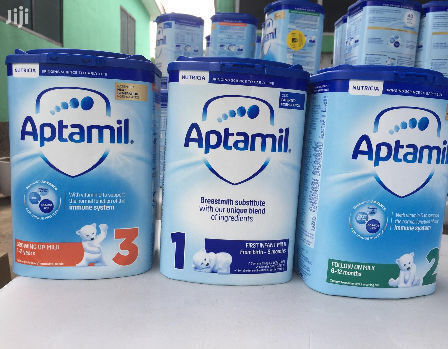
Aptamil China

Aptamil USA

Aptamil USA & Reliable Baby Formula Sourcing for Global Importers

Finding aptamil usa products through a reliable supply chain requires more than competitive pricing. Importers need traceability, consistent stock, compliant documentation, and dependable export support.

Therefore, choosing the right supplier can protect your margins and strengthen customer trust. We help international buyers source premium Aptamil products for wholesale and distribution.

Our supply solutions support importers across the USA, Canada, Singapore, Hong Kong, UAE, Europe, and other global markets. Moreover, we focus on reliable baby formula sourcing with transparent commercial processes.

Whether you need cartons, pallets, or larger wholesale quantities, our team can support your procurement requirements. We also help buyers understand packaging, documentation, shipping, and product specifications before purchase.

Why Choose a Reliable Aptamil Supplier?

International formula procurement requires careful supplier verification. Therefore, buyers should evaluate more than product price.

A dependable supplier should provide clear product information and traceable supply documentation. In addition, the supplier should maintain consistent communication throughout the order process.

Our commercial sourcing approach focuses on:

  • Authentic product sourcing
  • Transparent product specifications
  • Batch and expiry traceability
  • Export documentation support
  • Commercial packaging options
  • Reliable logistics coordination
  • Competitive wholesale pricing
  • International shipping assistance
  • Quality and compliance documentation
  • Responsive customer support

As a result, importers can reduce procurement risks and manage their supply chains more effectively.

Aptamil USA Wholesale Sourcing for International Importers

Importers searching for aptamil usa often need dependable access to genuine products. They also need clear information about origin, packaging, availability, and export requirements.

Our sourcing service connects qualified buyers with suitable Aptamil supply options. However, product availability can vary by market, packaging format, and current inventory.

We therefore confirm product specifications before accepting commercial orders. This approach helps prevent misunderstandings about labels, pack sizes, batches, and market versions.

For international buyers, we can discuss wholesale requirements based on:

  • Desired Aptamil product range
  • Stage or formulation
  • Required quantity
  • Packaging preference
  • Destination country
  • Shipping method
  • Documentation requirements
  • Target delivery schedule

Furthermore, buyers can request quotations based on cartons, pallets, or larger commercial volumes.

Premium Aptamil Supplier for Global Distribution

A premium Aptamil supplier should provide more than products. Instead, the supplier should support the entire purchasing process.

We understand that international importers need predictable communication and reliable documentation. Therefore, our team works with buyers before shipment to confirm commercial details.

This includes product availability, packaging, quantities, pricing, and shipping arrangements.

Additionally, buyers can request documentation relevant to their destination market. Requirements vary between countries, so we recommend confirming local import rules before ordering.

Our commercial support can cover markets such as:

  • USA
  • Canada
  • Singapore
  • Hong Kong
  • UAE
  • Germany
  • United Kingdom
  • Southeast Asia
  • Middle Eastern markets

This makes our service suitable for distributors, wholesalers, retailers, and international trading companies.

Suppliers of Infant Formula in USA, Canada, Singapore, Hong Kong and UAE

International buyers increasingly search for specialized suppliers of infant formula in USA with dependable sourcing capabilities. However, the same requirement applies across other high-value markets.

For Canada, importers often prioritize documentation, product compliance, and consistent supply. Meanwhile, buyers in Singapore require organized logistics and accurate shipment documentation.

Likewise, infant formula suppliers in Hong Kong must support efficient international trade and product traceability. UAE importers may also require market-specific documentation and suitable shipping arrangements.

Our sourcing model supports buyers looking for infant formula suppliers in Canada, Singapore, Hong Kong, and UAE. Therefore, customers can discuss their individual procurement requirements before placing an order.

We also recommend checking local regulatory requirements before importing infant formula. Import regulations can change by country and product category.

Authentic Product Sourcing and Traceability

Product authenticity remains a major concern for international baby formula importers. Therefore, traceability should remain central to every commercial purchase.

We prioritize clear product identification and batch information. In addition, buyers can request relevant product documentation where available.

Traceability can help importers verify:

  • Product identity
  • Batch information
  • Manufacturing details
  • Expiry information
  • Packaging specifications
  • Supporting certificates
  • Export documentation

Furthermore, proper documentation helps distributors maintain stronger internal inventory controls.

Certifications and European Quality Standards

Many international buyers prefer European baby formula because of its established quality framework. However, buyers should always verify the specific regulatory requirements for their destination market.

We help customers organize available documentation for commercial review. Depending on the product and transaction, documentation may include certificates of analysis, certificates of origin, health documents, invoices, packing lists, and other export paperwork.

European standards can provide an important quality benchmark. Nevertheless, importers remain responsible for meeting their destination country’s regulations.

Therefore, we encourage buyers to confirm labeling, registration, language, and import requirements before shipment.

Sustainable Baby Formula Supplier USA

Sustainability is becoming increasingly important for global food and nutrition supply chains. Therefore, importers are seeking suppliers that consider responsible logistics and packaging.

As a sustainable baby formula supplier USA buyers can evaluate, we support efficient commercial planning. Better planning can reduce unnecessary shipments, packaging waste, and avoidable logistics costs.

We also encourage consolidated purchasing where commercially appropriate. This approach can improve shipping efficiency for larger wholesale orders.

Moreover, buyers can discuss packaging requirements before shipment. Proper packaging protects products during transportation while supporting efficient warehouse handling.

Cold Chain and Export Logistics

Proper logistics matter when transporting nutrition products internationally. Therefore, shipment planning should consider product requirements, destination conditions, and transit times.

Where applicable, we coordinate suitable logistics arrangements with experienced freight partners. Buyers can discuss air freight, sea freight, and other available transportation options.

For temperature-sensitive products, suitable cold-chain procedures may also be considered. However, requirements depend on the specific product and shipping route.

We also help coordinate essential export documentation. This can include commercial invoices, packing lists, certificates of origin, and other required paperwork.

As a result, importers receive better visibility before their shipments leave the supplier.

Buy Aptamil in Bulk for Wholesale Distribution

Importers looking to buy Aptamil in bulk can request a tailored commercial quotation. Wholesale pricing usually depends on quantity, product selection, destination, and shipping terms.

We support different purchasing requirements for qualified commercial buyers. These may include distributors, wholesalers, supermarkets, retailers, and international trading companies.

For larger orders, buyers can request pallet or container planning. This allows both sides to evaluate logistics before final confirmation.

Additionally, buyers can discuss mixed-product purchasing when available. Such flexibility may help distributors build a broader product portfolio.

Why International Importers Choose Our Sourcing Service

Reliable sourcing can make international formula distribution easier. Therefore, our approach combines product sourcing with commercial and logistics support.

We focus on:

Product reliability: We prioritize clear product information and traceability.

Commercial flexibility: Buyers can discuss quantities and product requirements.

Export support: We help organize relevant commercial documentation.

Global logistics: We support shipping coordination for international destinations.

Quality focus: We emphasize product identification, packaging, and documentation.

Customer communication: We keep buyers informed throughout the procurement process.

Consequently, importers can make purchasing decisions with greater confidence.

Frequently Asked Questions

Where can I buy Aptamil in the USA?

Commercial buyers can contact a verified supplier to discuss available Aptamil products, quantities, packaging, and shipping requirements. Product availability should be confirmed before ordering.

Are there distributors of Aptamil USA products?

Yes, commercial distributors may source Aptamil products through established supply channels. Buyers should verify product authenticity, documentation, packaging, and market suitability.

Can I buy Aptamil in bulk?

Yes. Qualified wholesale buyers can request bulk quotations based on cartons, pallets, or larger quantities. Pricing depends on product selection and destination.

Do you provide export documentation?

Documentation depends on the product and destination. Available documents may include invoices, packing lists, certificates of origin, and quality-related documents.

Can you supply Aptamil for Canada, Singapore, Hong Kong, and UAE?

We support international sourcing discussions for these markets. However, buyers should confirm local import, labeling, registration, and regulatory requirements before ordering.

Can packaging or labeling requirements be discussed?

Yes. Packaging requirements should be confirmed before purchase. Market-specific labeling requirements may also apply depending on the destination.

Conclusion: Choose Reliable Baby Formula Sourcing

Successful international distribution starts with dependable sourcing. Therefore, importers need a supplier that understands products, documentation, packaging, logistics, and market requirements.

Our commercial sourcing service helps buyers explore suitable Aptamil supply options for international distribution. We support procurement discussions for the USA, Canada, Singapore, Hong Kong, UAE, Europe, and other markets.

If you are searching for aptamil usa, wholesale baby formula, or reliable international sourcing, contact our team for product availability and a commercial quotation.

Request your wholesale quotation today and build a more reliable baby formula supply chain.